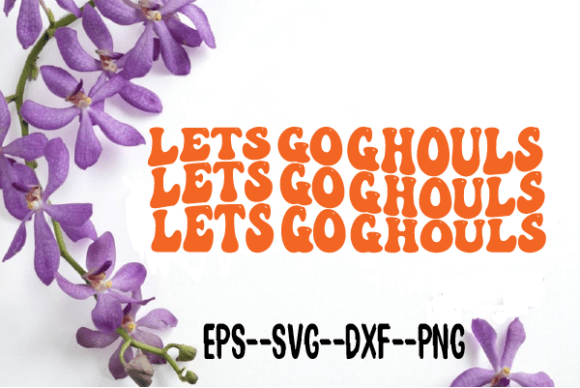
Lets Go Ghouls New Retro Wavy Svg
As a designer who’s stitched over 2,000 custom embroidery projects—from boutique baby onesies to Etsy best-selling tote bags—I opened Lets Go Ghouls New Retro Wavy Svg expecting playful energy. What I found was a tight, confident retro wave that lands somewhere between vintage Halloween charm and modern craft cool. It’s not spooky—it’s winkingly mischievous. Think late-’80s arcade posters meets handmade gift shop shelf appeal.
A Real Project Test: Embroidering This on a Linen-Cotton Kitchen Towel
Last week, I prepped a small-batch holiday line for my local maker market—linen-cotton tea towels with themed embroidery. I chose Lets Go Ghouls New Retro Wavy Svg for the “spooky season” set, pairing it with black thread on natural fabric. Right away, the wavy layout worked *with* the towel’s texture—not against it. The curves softened the rigidity of the weave, and the lettering held clarity even at 3.5" wide. No pixelation, no jagged edges in the vector paths. That’s critical when scaling for embroidery digitization.
But here’s what mattered most: customers didn’t just say “cute.” They paused. Smiled. Asked, “Is this for kids? Or is it *for me*?” That dual-ageless appeal is rare—and valuable—for craft businesses targeting both parents and nostalgic adults.
Where This Design Truly Shines (and Where It Needs Care)
Lets Go Ghouls New Retro Wavy Svg excels in medium-to-large applications where its rhythm can breathe:
- Tote bag designs: Centered on the front panel, it reads clearly from three feet away—ideal for farmers’ markets or boutique displays.
- Sweatshirt embroidery: Its horizontal flow balances the weight of fleece without crowding the chest area.
- Embroidered patches: Clean outer contours mean crisp edge stitching; minimal internal detail avoids over-stuffing in satin stitch.
- Pillow covers & nursery decor: Softly thematic but not infantilized—perfect for gender-neutral baby showers or Halloween-themed nurseries.
- Holiday embroidery bundles: Stands out alongside candy corn or jack-o’-lantern motifs without competing visually.
That said, proceed thoughtfully in these situations:
- Small hoop sizes (<4"): The wavy baseline and subtle kerning between letters demand breathing room. Shrinking below ~2.75" risks losing legibility in fill stitch areas.
- Stretchy fabric (e.g., ribbed knits): The design’s smooth curves rely on stable tension. Use cutaway stabilizer—and test on scrap first.
- Dark fabric + light thread: The retro outline style works beautifully in reverse (white on navy), but avoid pastel threads on charcoal—they’ll mute contrast.
- Curved surfaces like caps: The horizontal emphasis doesn’t wrap naturally. Best placed on flat panels (back yoke, front pocket) rather than crown or curve.
- Frequent-wash items (baby clothes, kitchen towels): Confirm your digitizer uses balanced stitch density—no dense fills under “GHOULS” that could stiffen fabric over time.
What This Means for Your Craft Business
If you’re an Etsy seller, small shop owner, or digital product creator, Lets Go Ghouls New Retro Wavy Svg isn’t just decoration—it’s a brand signal. Its retro wave feels intentional, not algorithmically trendy. Customers associate that intentionality with quality handmade product and thoughtful curation.
I’ve seen similar designs fail because they looked like clipart. This one doesn’t. Why? The subtle thickness variation in the letterforms, the gentle swell of the baseline, the consistent negative space—all speak to deliberate vector craftsmanship. That translates directly to perceived value in your finished product.
For embroidered patch sellers: this scales cleanly into 2.5"–4" formats with strong visual recognition—even as a sew-on accent on denim jackets or backpacks. For personalized gift makers: pair it with a monogrammed initial above or below, and you’ve got a cohesive, memorable keepsake.
Practical Designer Notes Before You Stitch
This is a sublimation-ready SVG—but remember: embroidery requires digitization. If you’re using it for machine embroidery design, you’ll need to convert it properly. Here’s how I approach it:
- Test on scrap fabric first—especially if using textured linen, terry cloth, or lightweight cotton.
- Check thread color contrast in both natural and artificial light. Retro palettes (mustard, rust, teal) pop on cream, but fade on heather gray.
- Review stitch density in curved sections. Overly dense satin stitch on the “wavy” baseline can cause puckering.
- Confirm hoop size compatibility before digitizing—some versions of this design stretch beyond standard 5x7 hoops.
- Inspect small details like the dot over the “i” in “GHOULS”—they must survive scaling down to 3" without vanishing.
- Test black-and-white mockups to verify silhouette strength. A great retro design should read instantly in monochrome.
- Use proper stabilizer: medium-weight cutaway for knits, tear-away for stable wovens like quilting cotton.
- Verify licensing before selling finished items or digital embroidery files—this product lists sublimation use, so confirm commercial embroidery rights separately.
Final Thought: Not Just a Graphic—A Mood Anchor
Lets Go Ghouls New Retro Wavy Svg belongs in your Crafts toolkit not because it’s trendy, but because it’s versatile, emotionally resonant, and technically sound. It’s the kind of design that makes a holiday mug feel special, turns a plain sweatshirt into a conversation starter, and helps a small shop stand out in a sea of generic graphics.
It won’t carry every project—but when it fits? It elevates. Whether you’re designing for a client, prepping for a craft fair, or building your next Etsy collection, this is one of those rare Graphics assets that earns its place in repeat rotation.