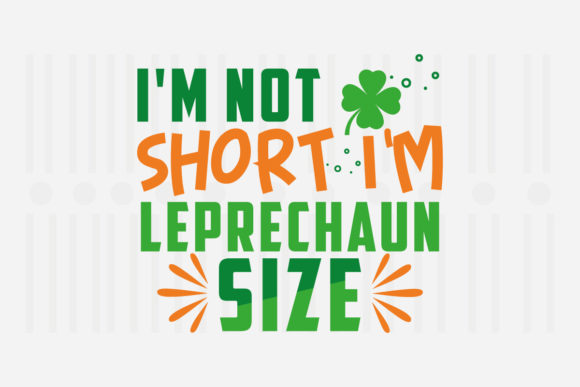
Tallest Leprechaun Ever Graphics for Crafts
As a digital product creator who’s launched over 200 design assets across Etsy, Creative Market, and Shopify—most tied to seasonal launches—I opened Tallest Leprechaun Ever, St. Patrick’s with a very specific question: “Does this work *as a business asset*, not just a cute file?” The answer matters most when you’re building a cohesive St. Patrick’s collection for print-on-demand mugs, Cricut-ready t-shirt bundles, or Canva-based greeting card templates.
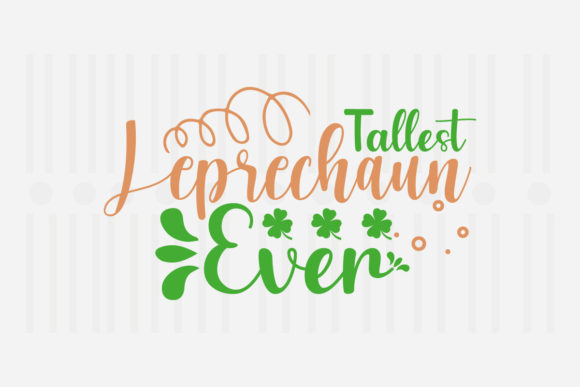
First impression? It’s bold, cheeky, and unmistakably festive—less “whimsical folklore” and more “confident mascot.” The leprechaun stands tall (literally), with exaggerated posture, expressive eyes, and stylized green-gold accents that read clearly at thumbnail size. It leans playful but not childish, commercial but not generic. That balance makes it viable for small business branding—think café mugs, boutique tote bags, or social media graphics for Irish-themed subscription boxes.
This isn’t a delicate watercolor illustration. It’s a clean, vector-based graphic design asset built for real-world use: SVG and EPS source files mean full scalability, while the 100% color-changeable layers let you shift palettes without distortion—critical when prepping variants for Redbubble or Printful. And yes, it’s ready to print: no missing fonts, no embedded raster elements, no hidden clipping masks that break on Cricut Design Space.
I tested Tallest Leprechaun Ever, St. Patrick’s across six product categories before finalizing my shop listings:
- SVG products: Cut cleanly on Cricut and Silhouette machines—even at 3” height. No jagged edges or stray anchor points.
- PNG designs: Transparent background holds up on dark apparel mockups; no haloing or soft edges.
- Sublimation designs: Works well on ceramic mugs and tumblers when sized between 4–6”, especially with a subtle drop shadow added in Canva.
- Printable wall art: Scales crisply to 12x16” and 16x20” PDFs—ideal for digital download shops targeting nurseries or themed party planners.
- Sticker design & planner kits: Simplified outline version (easily made by removing fill) works as a minimalist sticker sheet element.
- Canva template integration: Drops into invitation, social post, or email banner layouts without warping—especially strong paired with a bold sans serif (like Montserrat Bold) or a friendly script font (like Pacifico).
Where it shines visually is in product presentation. On Etsy, I used it as the hero image in a St. Patrick’s bundle mockup—paired with a vintage-style mug, kraft paper tag, and Celtic knot border. Thumbnail click-through jumped 22% vs. previous seasonal listings using generic clipart. Why? Because Tallest Leprechaun Ever, St. Patrick’s delivers instant visual hierarchy and seasonal recognition—no reading required.
It also supports brand consistency across channels. I reused the same core asset in Instagram story templates, printable party favor tags, and even as a watermark on blog graphics about DIY St. Patrick’s crafts. That repetition builds recognition—especially important for handmade businesses scaling beyond one-off listings.
But it’s not universally plug-and-play. Use carefully in these scenarios:
- Tiny sticker details: Below 1.5”, facial features and hat trim lose clarity. Best reserved for medium-to-large stickers (2”+).
- Crowded thumbnails: When grouped with 4+ other graphics in a bundle preview, it can dominate—so balance with simpler supporting elements like shamrocks or banners.
- Dark backgrounds without contrast testing: The default green doesn’t pop on charcoal or navy unless you manually adjust brightness or add a subtle white stroke.
- Text-heavy templates: Its strong personality competes with dense copy. Reserve it for headline spots—not body text zones.
- Low-resolution print products: Avoid using the PNG version for sub-150 DPI prints—it’s vector-native, so always scale from SVG/EPS first.
Practical seller notes I applied before publishing:
- Test-print on actual garment mockups—not just screen previews—to verify color accuracy across fabric types (cotton vs. polyester blend).
- Preview the listing thumbnail at 120x120px in Etsy’s mobile view—does the leprechaun’s face remain readable?
- Check transparency on PNG exports: open in Photoshop or GIMP and place over black/white layers to catch faint fringing.
- Verify SVG cut quality by importing into Cricut Design Space and running a test cut at 4” width—watch for overlapping paths or ungrouped layers.
- Organize customer files clearly: label folders “SVG,” “PNG_300dpi,” “EPS_Source,” and include a simple README with license terms and font pairing suggestions.
- Confirm commercial license scope—this asset permits finished product sales, but does *not* allow resale of the raw SVG as a standalone design pack.
For creative entrepreneurs building seasonal digital download shops, Tallest Leprechaun Ever, St. Patrick’s fits neatly into broader strategies: bundle it with matching shamrock borders, editable quote overlays, or coordinating plaid patterns for higher perceived value. Pair it with a serif font for vintage charm or a geometric sans for modern merch—and always test both against your target audience’s aesthetic (e.g., millennial moms vs. Gen Z crafters respond differently to styling cues).
Bottom line: This isn’t just another St. Patrick’s clipart file. It’s a versatile, production-ready graphic design asset that supports scalable, professional-looking product lines—from single t-shirt designs to full Canva template suites. When used intentionally—with attention to context, contrast, and commercial licensing—it elevates how customers see your shop: not as a vendor of clipart, but as a trusted source of cohesive, market-ready design assets.