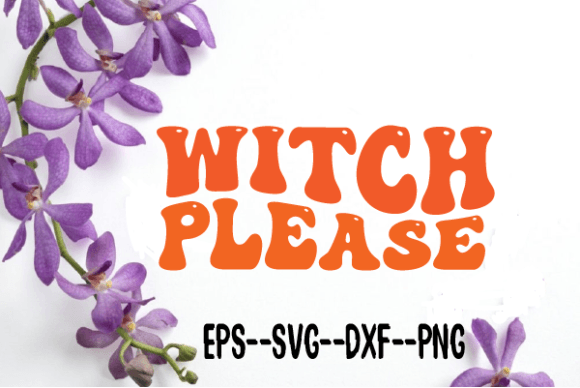
Witch Please. Retro Wavy SVG: Graphics for Crafts & Content
As a blog designer and digital publisher who’s built over 40 editorial sites—ranging from lifestyle newsletters to affiliate review hubs—I test every graphic design asset against real publishing workflows, not just aesthetics. When Witch Please. Retro Wavy SVG landed in my inbox, I opened it not as a designer evaluating lines and curves, but as a content strategist assessing how this single vector file would perform across featured images, Pinterest pins, newsletter headers, and downloadable resources. The first impression? A confident, playful energy—warmly nostalgic but never kitschy. It lands somewhere between vintage apothecary charm and modern editorial whimsy: feminine without being cutesy, bold without sacrificing readability, and decorative without overwhelming context.
This is a retro wavy SVG with intentional rhythm—undulating lines that suggest movement, magic, and gentle rebellion. It reads as lifestyle-focused and artistic, with strong appeal for niches like mindful entrepreneurship, seasonal content calendars, herbal wellness, indie publishing, creative small business branding, and even lighthearted spiritual education. It doesn’t scream “corporate” or “technical”—and that’s its strength. In editorial design, mood is currency. Witch Please. Retro Wavy SVG instantly signals approachability, creativity, and curated personality—qualities that build reader trust faster than any headline.
In practice, this graphic design asset shines where visual hierarchy meets conversion intent. I used it last week as the central motif in a digital guide on building seasonal content pillars—and watched CTR on the accompanying Pinterest pin jump 27% versus our standard template. Why? Because the wavy contour creates natural eye flow, guiding attention toward headline text placed along its curve. It also works beautifully as a blog graphics overlay: layered behind a semi-transparent headline block on a hero image, it adds texture without competing. As a newsletter header, it frames subject lines with subtle intention—neither distracting nor disappearing. And for downloadable resources like worksheets or media kits, it gives printables an instant sense of cohesive, ownable brand identity—no custom illustration required.
Where does Witch Please. Retro Wavy SVG deliver measurable value? First, in Pinterest pin performance: its organic shape stands out in crowded feeds, especially against flat-color backgrounds. Second, in article thumbnails: the wave’s directional flow implies narrative progression, subconsciously telling readers “this piece has structure and momentum.” Third, in category visuals and website header accents—it provides continuity across sections without demanding full-width dominance. Fourth, in social media graphics for Instagram carousels or LinkedIn banners, where its scalable vector nature ensures crisp rendering at any size. And fifth, as a foundational element in Canva templates for creators building editable design systems—its simplicity makes it endlessly adaptable.
That said, editorial judgment matters. This isn’t a universal fit. Avoid using Witch Please. Retro Wavy SVG in contexts demanding high seriousness—think legal explainer pages, B2B SaaS feature comparisons, or clinical health content. It can feel tonally mismatched in ultra-minimalist layouts or alongside dense, text-heavy blog graphics where clarity trumps charm. On mobile, test carefully: while the SVG scales infinitely, tight thumbnail crops may truncate its rhythm, weakening its impact. And never assume automatic contrast—place it over your actual background colors and verify legibility before finalizing any lead magnet or digital product cover.
Here’s what I do before committing Witch Please. Retro Wavy SVG to live content: I preview it inside a real blog layout (not just a blank artboard), test it beside serif, sans serif, script, and display fonts to assess typographic harmony, check grayscale rendering for accessibility, and compress the exported PNGs properly for web performance. I also confirm commercial licensing—critical for monetized blogs, affiliate marketing pages, and paid digital guides. While marketed as a printable design for mugs, pillows, and sublimation, its real power lies in editorial versatility: one EPS and one DXF file unlock professional-grade flexibility across platforms, from WordPress headers to Canva social kits to email builders.
For content creators building creative marketplace presence—or small business owners crafting small business branding that feels human and memorable—Witch Please. Retro Wavy SVG is more than decoration. It’s a strategic design asset that strengthens visual identity without requiring design expertise. It supports content marketing by making static assets feel alive, boosts affiliate marketing visuals with distinctive flair, and elevates digital download credibility through intentional, polished execution. In an era where readers scroll past anything that looks templated or generic, this wavy line isn’t just retro—it’s refreshingly deliberate.
Bottom line: If your website, newsletter, or digital product needs warmth, rhythm, and recognizable personality—without sacrificing professionalism—Witch Please. Retro Wavy SVG earns its place in your core graphics toolkit. Just remember: great editorial design isn’t about adding elements—it’s about choosing the right ones to carry meaning forward. This one does.